


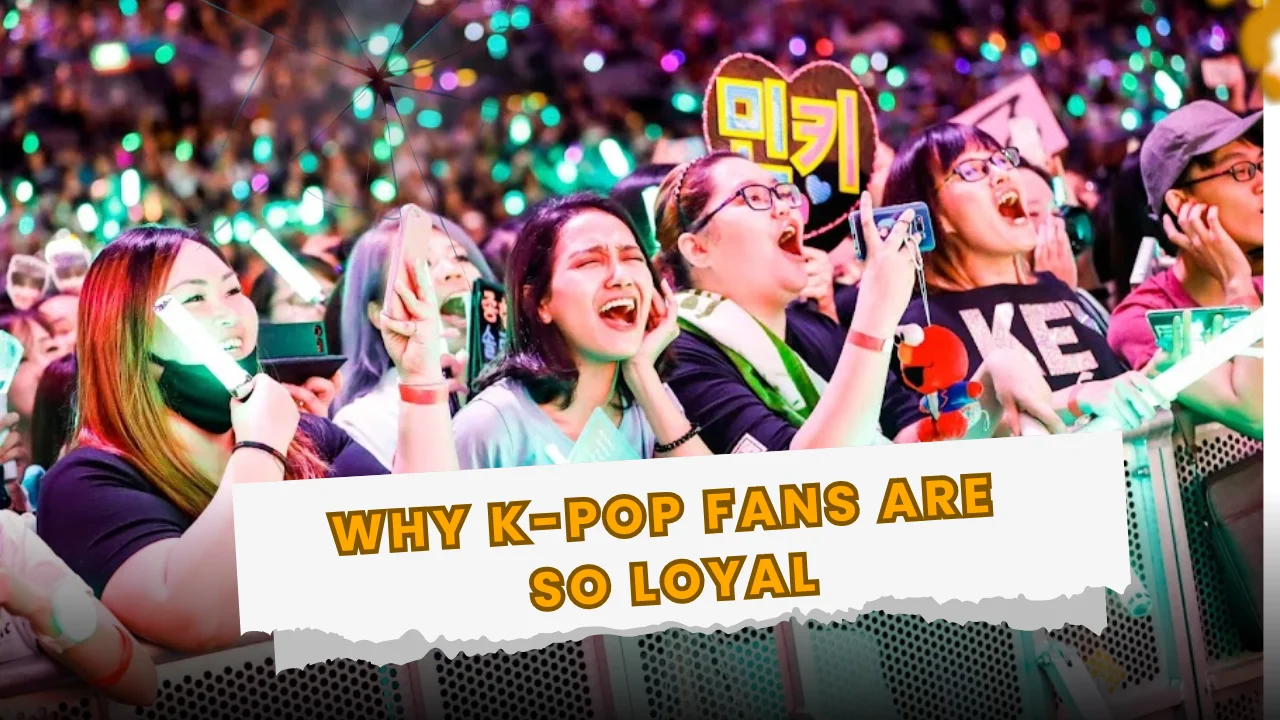
If you’ve ever seen a K-Pop fandom in action — whether cheering in stadiums, trending hashtags, defending their idols online, or organizing charity projects — you’ve probably wondered one thing:
Why are K-Pop fans so loyal?
This loyalty is not just admiration. It’s deep, emotional, organized, collective — sometimes stronger than the loyalty seen in traditional music or film fandoms across the world.
To understand why, we need to look at how K-Pop is built, how fandom culture is nurtured, and what psychological needs it fulfills for fans.
This is not accidental.
It is designed — but also deeply human.
Let’s break it down.
1. K-Pop Doesn’t Just Sell Music — It Sells Personal Connection
In most Western music industries, fans connect with songs.
In K-Pop, fans connect with the artists as individuals.
K-Pop companies carefully craft what is called an “idol-fan relationship.”
This includes:
- Behind-the-scenes content
- Vlogs and livestreams
- Variety show appearances
- Reality-style group videos
- Fan letters and fan apps
Fans feel like they know the artist — not just their talent, but their personality.
This creates parasocial bonding — a one-sided emotional connection that feels real and warm.
When fans say:
“I feel like they’re part of my life.”
They mean it.
Psychology Behind It
Humans bond with people they consistently see, even through screens.
The brain doesn’t differentiate real vs digital presence — emotional attachment builds anyway.
2. K-Pop Idols Show Hard Work, Not Just Talent
K-Pop artists are not born stars — they are trained.
Years of:
- Vocal practice
- Dance rehearsals
- Diet control
- Stage performance preparation
- Media & personality training
And all of this happens before debut.
So when an idol finally debuts, fans feel like:
- They earned it.
- They worked for it.
- They deserve support.
This triggers a psychological phenomenon called earned admiration.
Fans think:
“I saw their journey. I want to see them succeed.”
It’s loyalty built on shared struggle and witnessed effort.
3. Fandoms Feel Like Family — A Community That Understands You
K-Pop fandoms are organized and united.
Fans:
- Share inside jokes
- Use common slogans
- Attend concerts together
- Celebrate birthdays of idols
- Create group chats, art, edits, fan pages
Being part of a fandom gives:
- Belonging
- Identity
- Shared purpose
This hits a major emotional need — something every human wants:
To be part of a group that truly understands them.
This makes fandoms feel like home.
For many:
- School feels lonely
- Family is stressful
- Social life is limited
But the fandom?
It’s warm. It’s supportive. It’s alive.
4. K-Pop Groups Show Vulnerability — And Fans Protect Them
Idols talk openly about:
- Nervousness before performances
- Their mistakes
- Fears of disappointing fans
- Feeling exhausted
- Wanting to improve themselves
This vulnerability creates emotional intimacy.
Fans don’t just admire idols —
They care about them.
The instinct becomes:
“I want to protect them.”
This is loyalty based on empathy.
5. The Music Is Produced for Emotional Attachment
K-Pop songs aren’t just catchy — they are written to create feeling.
Common themes include:
- Self-worth
- Loneliness
- Growth
- Friendship
- Dreams
- Healing
- Hope
These themes match teenage and young adult emotional development.
So when fans listen, it feels like:
“This song understands me.”
And when people feel understood, they stay.
6. Fandom Participation Creates a Sense of Purpose
K-Pop fandoms do things together, such as:
- Streaming goals
- Voting in award shows
- Breaking YouTube records
- Supporting album releases
- Organizing fan projects
Completing goals together builds shared accomplishment.
This is powerful psychology:
- Team-based achievement strengthens loyalty
- Effort reinforces emotional attachment
When fans say:
“We made our group win!”
It creates pride — and deeper belonging.
7. K-Pop Gives Many Fans Emotional Support They Don’t Get Elsewhere
This is one of the strongest reasons.
For many fans, K-Pop becomes a source of:
- Comfort during stress
- Motivation during struggle
- Happiness during sadness
- Hope during confusion
When life feels overwhelming, music and idols offer emotional grounding.
That kind of support is unforgettable.
It builds lifelong loyalty.
8. The Visual Storytelling Sets K-Pop Apart
K-Pop is visual art — not just sound.
This includes:
- Music videos with deep symbolism
- Concept photos
- Fashion styles
- Dance choreography
- Stage performances with storytelling layers
Fans don’t just listen — they experience.
The creativity encourages:
- Meaning interpretation
- Emotional immersion
- Personal connection
This is far more memorable than standard pop music.
9. Fans Don’t Just Support Idols — Idols Support Fans Too
Many idols:
- Acknowledge fans directly
- Write messages on fan platforms
- Cry on stage thanking fans
- Say things like “You helped me get through this.”
- Show gratitude at every achievement
Fans feel valued.
This is not audience → performer.
It becomes human → human support.
10. Loyalty Comes From Emotional Safety
In a world full of:
- Stress
- Pressure
- Loneliness
- Judgment
K-Pop provides:
- Comfort
- Routine
- Inspiration
- Friendship
It becomes a bright place to return to.
People stay loyal to where they feel emotionally safe.
Final Thought
K-Pop loyalty is not irrational, extreme, or blind.
It is based on:
- Emotional connection
- Shared community
- Witnessed growth
- Mutual support
- Identity and belonging
K-Pop fandom is not just music fandom.
It is a culture.
A community.
A home.
And when something feels like home —
You don’t leave it easily.
